

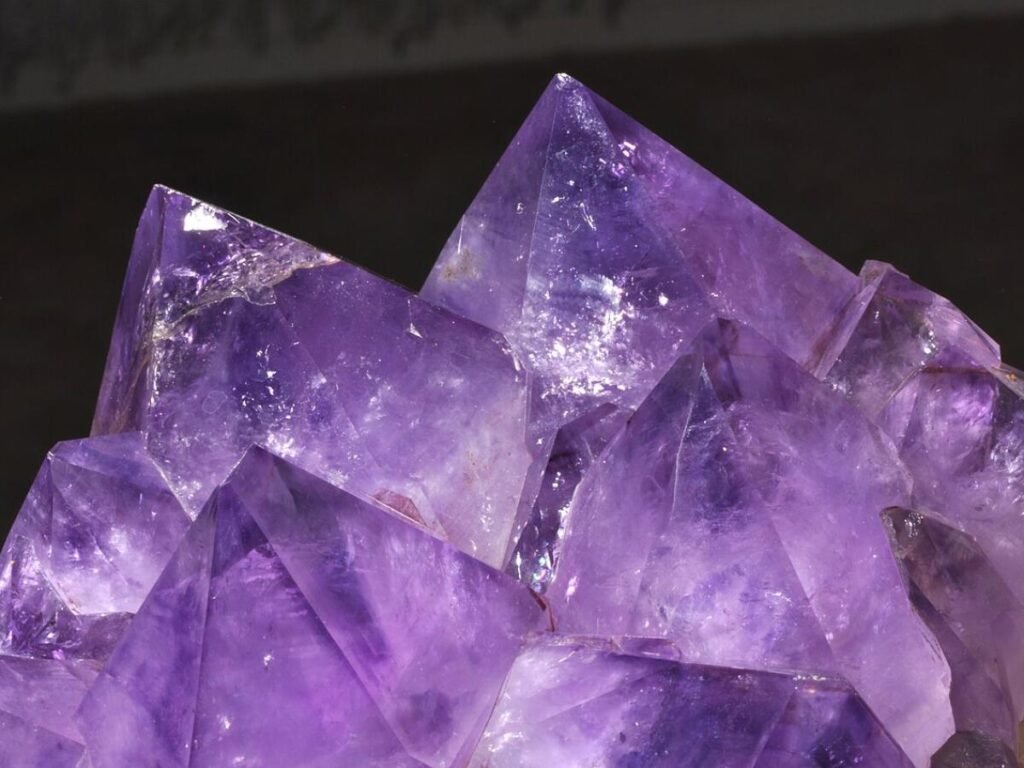
In the Atacama Desert in Chile, scientists have discovered an unusual mineral that can spontaneously cool when exposed to a magnet. The crystal, called atacamite, exhibits this property at extremely low temperatures.
Unique properties of atacamite
A team from the Technical University of Braunschweig and the Helmholtz Centre Dresden-Rossendorf studied the structure of atacamite and found that it all comes down to the arrangement of copper ions. They line up in chains resembling saw teeth, which leads to a state of magnetic frustration – the inability to stabilize magnetic moments.
Experimental confirmation
During the experiment, conducted at temperatures below -264 °C and in an ultra-strong magnetic field, the temperature of the mineral dropped by almost half. The effect was unexpected: most materials either heat up or react weakly in such conditions.
Potential applications
Physicists believe that this discovery will help in developing new methods of magnetic cooling. Modern refrigerators work by compressing and expanding gas, which is not always efficient and environmentally friendly. Although atacamite itself is unlikely to be used directly due to the complexity of its extraction, the mechanism found can be used to create synthetic materials that can work at normal temperatures.
Future Prospects
This could be a breakthrough in energy and refrigeration technology. Scientists hope that their discovery will pave the way for the development of more efficient and environmentally friendly cooling methods.
In the future, the researchers plan to study the properties of atacamite in more detail and the possibility of its application in various fields.








 EN
EN  RU
RU